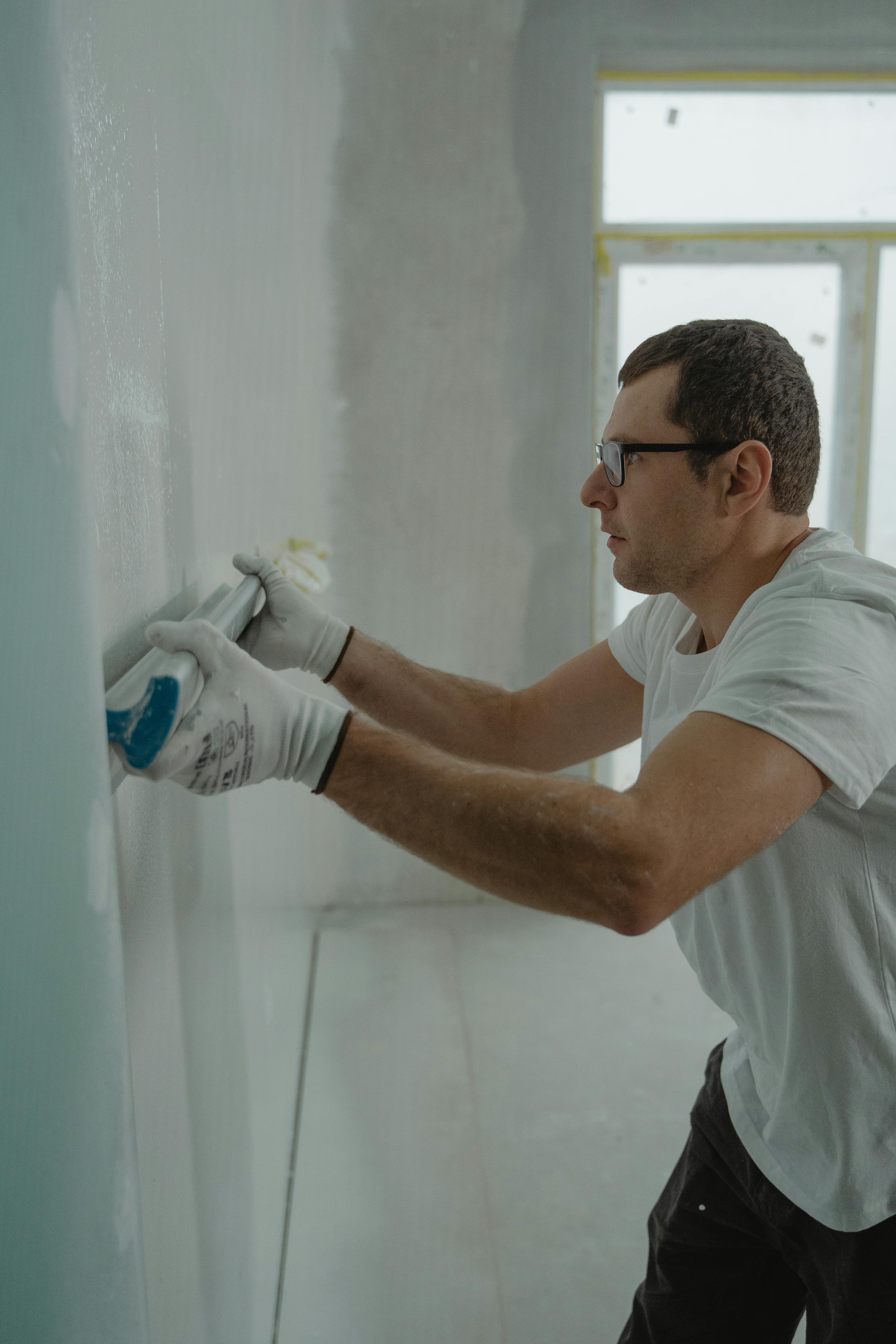
Taping and mudding drywall seams requires three coats of joint compound over paper tape, using progressively wider knives (6” → 10” → 12”) with 24-hour drying between coats. Paper tape is stronger than mesh and works with any compound. The key to invisible seams is proper feathering—each coat extends 2-3 inches beyond the previous.
Taping and mudding is what separates amateur drywall work from professional results. The technique isn’t difficult, but it requires patience—rushing drying times or skipping coats always shows in the final paint job.
What You’ll Need
Tools:
- 6-inch taping knife: $8-15
- 10-inch taping knife: $12-20
- 12-inch finishing knife: $15-28
- Mud pan (metal, 12-14”): $8-15
- Sanding pole with extension: $20-40
- Corner knife/trowel: $15-25
Materials:
- Joint compound (4.5 gal bucket, ~450 sq ft): $15-25
- Paper tape (500’/roll): $3-5
- Sandpaper 150-grit (pack): $8-12
For a 12x12 room: ~$50-100 in materials
Paper Tape vs. Mesh Tape
| Feature | Paper Tape | Mesh Tape |
|---|---|---|
| Adhesion | Requires bedding in wet mud | Self-adhesive |
| Strength | Stronger joints | More elastic |
| Corners | Excellent (factory crease) | Difficult |
| Skill level | More practice needed | Easier for beginners |
| Required compound | Any compound | MUST use setting compound |
| Best use | Seams, corners, stress areas | Patches, repairs, bathrooms |
Most professionals use paper tape because it creates stronger, more crack-resistant joints. If you use mesh tape, you MUST use setting-type compound (hot mud)—mesh with pre-mixed compound will crack, guaranteed.
The Three-Coat System
Coat 1: Tape Coat (Day 1)
Purpose: Embed tape and cover fasteners
Knife size: 4-6 inch
Process:
- Mix compound to smooth, yogurt-like consistency
- Load knife with compound from mud pan
- Apply thin layer along entire seam
- Immediately center paper tape over seam
- Starting at center, press tape with knife, working toward each end
- Squeeze out air bubbles and excess compound
- Apply thin layer over tape—just enough to cover
- Cover all screw holes with small dab
- Dry 24 hours
Coat 2: Fill Coat (Day 2)
Purpose: Cover tape completely, begin feathering
Knife size: 8-10 inch
Process:
- Lightly scrape off ridges or dried bits
- Apply thin coat over tape, extending 2-3” beyond first coat on each side
- Feather edges by applying more pressure to outer edge of knife
- Slight center ridge is normal at this stage
- Cover screw holes again
- Dry 24 hours
Coat 3: Finish Coat (Day 3)
Purpose: Final smoothing, invisible feathering
Knife size: 10-12 inch (up to 14” for skim coating)
Process:
- Light sand or scrape any ridges
- Thin compound slightly with small amount of water (pancake batter consistency)
- Apply very thin coat, extending 2-3” beyond second coat
- Focus on feathering edges until invisible
- Multiple light passes beat one heavy pass
- Dry 24 hours before sanding
Drying Times
| Compound Type | Drying Time | Best For |
|---|---|---|
| Pre-mixed all-purpose | 24 hours | All coats, beginners |
| Lightweight all-purpose | 16-24 hours | Second/third coats |
| Setting compound (20-min) | 20-45 min to set | First coat, fast repairs |
| Setting compound (45-min) | 45-90 min to set | Good working time balance |
How to tell when dry: Compound changes from dark gray to uniform light white/cream. Feels completely hard with no cool spots.
Optimal conditions: 65-80°F, 20-40% humidity. Below 55°F: don’t mud.
Feathering Technique
Feathering is the secret to invisible seams. The goal is creating a gradual slope from the center of the repair to the surrounding wall.
Technique:
- Apply more pressure to the outside edge of your knife, less to center
- Hold knife at low angle (nearly parallel to wall)
- Lift one side of blade to scrape razor-thin at edges
- Use long, continuous strokes
- Each coat feathers 2-3” beyond the previous
Knife progression matters: Larger knives spread compound over wider areas, creating gentler slopes that disappear under paint.
| Coat | Knife | Total Width |
|---|---|---|
| 1st | 6” | ~6-8” |
| 2nd | 10” | ~10-12” |
| 3rd | 12” | ~14-16” |
Sanding Between Coats
Between coats:
- Light sanding only—knock off ridges and high spots
- Use 100-120 grit or sanding sponge
- Don’t over-sand; just remove imperfections
Final sanding:
| Stage | Grit | Tool |
|---|---|---|
| Rough areas | 100-120 | Pole sander |
| Smoothing | 150 | Pole sander |
| Touch-ups | 220 | Hand sandpaper |
Wet sanding option:
- Use damp drywall sponge
- Best for corners and detail work
- Creates less dust but slightly less smooth finish
- Rinse sponge frequently
Inside and Outside Corners
Inside Corners
- Fold paper tape along factory crease
- Apply compound to both sides of corner
- Press tape into corner, smooth both sides
- Apply compound over tape on both sides
- Use corner trowel or run knife along each side separately
Outside Corners
- Use metal or vinyl corner bead (not tape)
- Attach bead with drywall screws or crimping tool
- Apply compound, feathering away from corner
- 2-3 coats, same as flat seams
When to Call a Pro
Consider hiring a professional ($1.50-$3.50/sq ft) when:
- Large areas (whole rooms, multiple rooms)
- Level 4-5 finish required (flat paint, smooth walls)
- Ceiling work (difficult and tiring)
- Previous repairs have failed repeatedly
- Time constraints
DIY is appropriate for:
- Small patches and repairs
- Garages, utility rooms, storage areas
- Areas that will be textured
- Practice areas before tackling visible rooms
Common Mistakes to Avoid
- Wrong tape/compound combo — Mesh tape with pre-mixed compound = cracks. Always.
- Applying too much compound — Causes sagging, cracking, longer dry times. Thin coats only.
- Not embedding tape properly — Creates bubbles and weak seams that crack later.
- Rushing drying time — Each coat must dry completely or the next will fail.
- Not feathering edges — Creates visible ridges under paint.
- Over-sanding — Exposes tape, damages paper—requires starting over.
- Skipping coats — Two coats are minimum; three is standard for invisible results.
- Overlapping tape — Creates bulges. Cut tape ends to meet, not overlap.
Frequently Asked Questions
How many coats of mud do drywall seams need?
Drywall seams require three coats minimum: tape coat (embed tape, 6-inch knife), fill coat (cover tape, 10-inch knife), and finish coat (final smoothing, 12-inch knife). Allow 24 hours drying between each coat. The key is using progressively wider knives and feathering each coat further out.
Should I use paper tape or mesh tape for drywall seams?
Paper tape is stronger and preferred by professionals for seams, corners, and stress areas. Mesh tape is easier for beginners but MUST be used with setting-type compound (hot mud)—never pre-mixed, or it will crack. Paper tape works with any compound and creates more durable joints.
Why are my drywall seams showing through paint?
Visible seams usually mean insufficient feathering, not enough coats, or improper sanding. Each coat should extend 2-3 inches beyond the previous, creating a gradual slope. Use progressively wider knives (6-inch, 10-inch, 12-inch) and feather the final coat 10-12 inches on each side.
Related Guides
- Drywall Repair Guide — Complete overview of drywall repairs
- How to Fix Large Drywall Holes — California patch and mesh patch methods
- How to Match Drywall Texture — Blend repairs into textured walls