Start with the basics: check your thermostat settings, replace a dirty filter, and clear debris from the outdoor unit. If these don’t help, you likely need professional service for refrigerant or component issues.
Few things are more frustrating than an AC that runs but doesn’t cool, especially during a heat wave. Before calling for service, work through this troubleshooting guide—many issues have simple solutions you can fix yourself.
Step 1: Check Thermostat Settings
Before assuming something’s broken, verify your thermostat:
- Mode: Ensure it’s set to “Cool,” not “Heat” or “Fan Only”
- Temperature: Set it at least 5 degrees below the current room temperature
- Fan setting: Try “Auto” rather than “On” (constant fan can feel like weak cooling)
- Batteries: Replace if your thermostat uses batteries
- Schedule: Check that a programmed schedule isn’t overriding your settings
If you have a smart thermostat, check its app for any scheduled changes, eco modes, or away settings that might be limiting cooling.
Step 2: Inspect the Air Filter
A clogged filter is the most common cause of cooling problems:
- Locate your filter (return vent, air handler, or furnace)
- Remove and inspect it
- If it’s gray, matted, or you can’t see light through it, replace it
- Wait 30 minutes after replacing, then check if cooling improves
A severely clogged filter can cause the evaporator coil to freeze, which further reduces cooling. If you’ve been running with a dirty filter, the coil may need time to thaw.
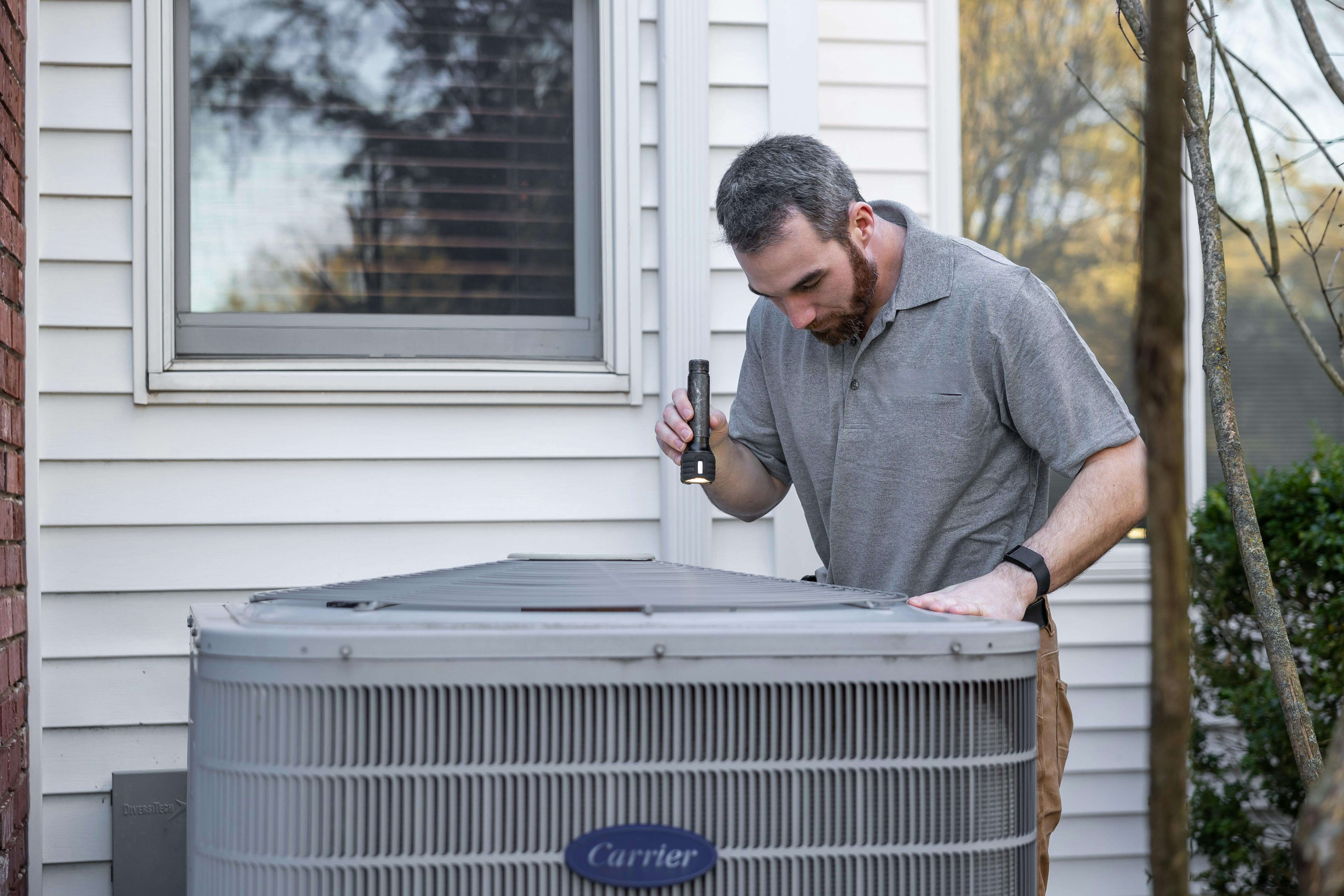
Step 3: Check the Outdoor Unit
The condenser unit outside needs adequate airflow:
Clear debris
- Remove leaves, grass clippings, and debris from around the unit
- Maintain 2 feet of clearance on all sides
- Trim back any vegetation
Verify it’s running
- Listen for the fan and compressor
- If the fan isn’t spinning, look for obvious obstructions
- If neither fan nor compressor run, check your circuit breaker
Look for ice
- Ice on refrigerant lines indicates a problem (low refrigerant, airflow issues, or a failing component)
- If you see ice, turn off the system and call a professional
Gently spray the condenser coils with a garden hose (not a pressure washer) to remove dust and debris. Make sure the unit is off first.
Step 4: Inspect Vents and Ductwork
Poor airflow throughout your home reduces cooling:
- Check all vents: Ensure supply and return vents are open and unobstructed
- Feel the air: Air from vents should feel cool, not lukewarm
- Look for obvious duct problems: Disconnected or damaged ductwork in accessible areas
Step 5: Check the Circuit Breaker
AC systems often have two breakers—one for the outdoor unit and one for the air handler:
- Locate your electrical panel
- Look for breakers labeled “AC,” “Condenser,” or “Air Handler”
- If tripped, reset by turning fully off, then on
- If it trips again immediately, do NOT keep resetting—call a professional
When to Call a Professional
If the above steps don’t solve the problem, you likely need professional help for:
Low Refrigerant
Signs: Ice on refrigerant lines, hissing sounds, gradual loss of cooling over time
Refrigerant doesn’t get “used up”—low levels indicate a leak. A technician will find and repair the leak, then recharge the system.
Frozen Evaporator Coil
Signs: Ice visible on the indoor unit, water leaking around air handler, warm air from vents
Causes include low refrigerant, poor airflow, or blower motor problems. Turn off the system to let it thaw and call for service.
Compressor Issues
Signs: Outdoor unit hums but doesn’t run, outdoor unit doesn’t start at all, system short cycles
The compressor is the heart of your AC—problems here often require significant repair or system replacement.
Electrical Problems
Signs: System won’t start, breaker keeps tripping, burning smell
Electrical issues can be dangerous. Don’t attempt DIY repairs on electrical components.
Blower Motor Failure
Signs: No air from vents even though outdoor unit runs, weak airflow, unusual noises from air handler
The blower motor circulates air through your home—if it fails, you won’t feel cooling even if the outdoor unit works.
Prevention Tips
Avoid future cooling problems with regular maintenance:
- Change filters: Check monthly, change every 1-3 months
- Annual tune-up: Schedule professional maintenance in spring
- Keep outdoor unit clear: Maintain clearance and clean coils annually
- Address problems early: Don’t ignore small issues—they often become big problems
Quick Reference: AC Not Cooling Checklist
- Thermostat set to “Cool” and temperature below current room temp
- Air filter is clean
- All vents are open and unobstructed
- Outdoor unit is clear of debris
- Outdoor unit fan is running
- No ice visible on refrigerant lines or outdoor unit
- Circuit breakers are not tripped
If you’ve checked everything on this list and your AC still isn’t cooling, it’s time to call in a professional. Many HVAC companies offer 24/7 emergency service during hot weather.