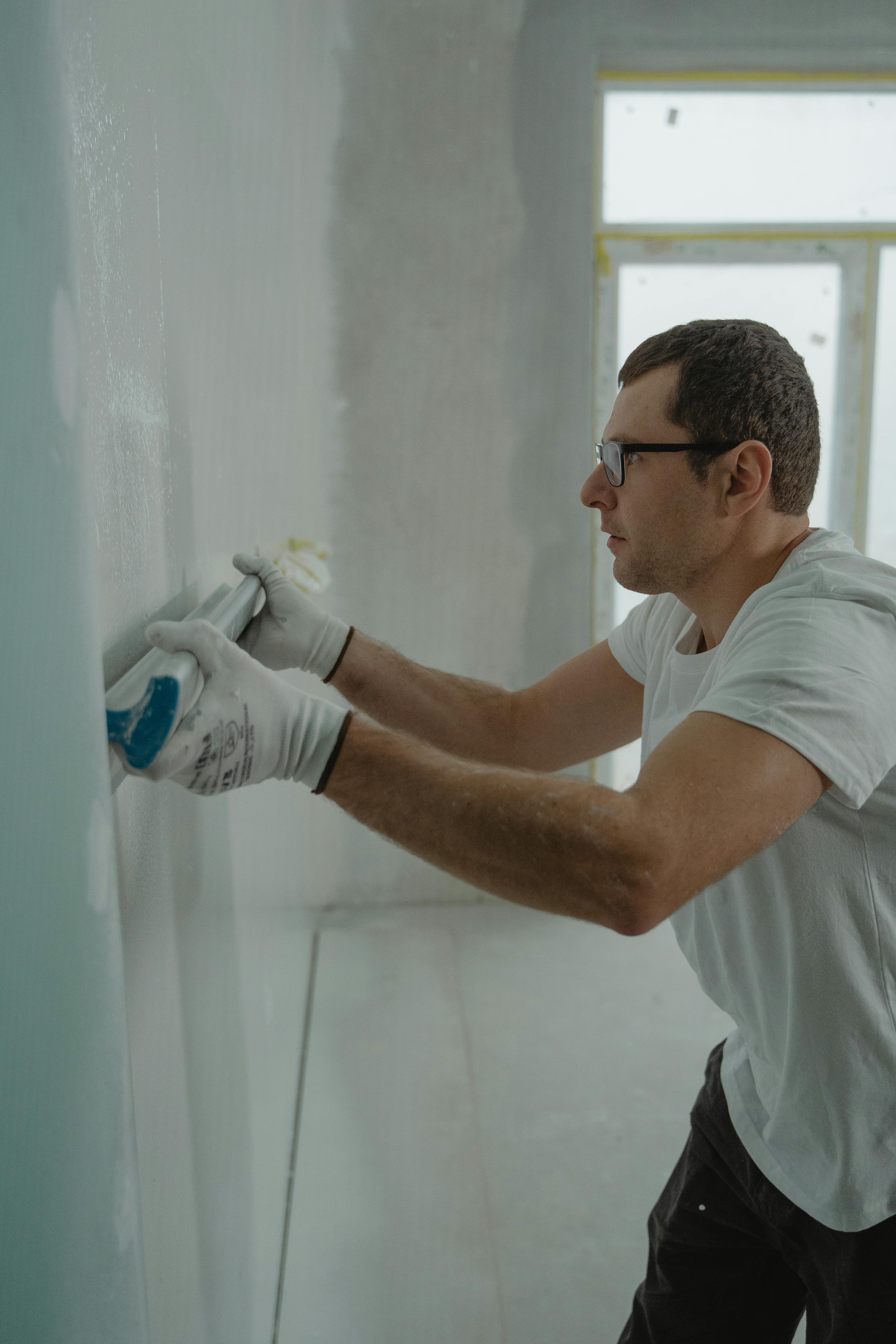
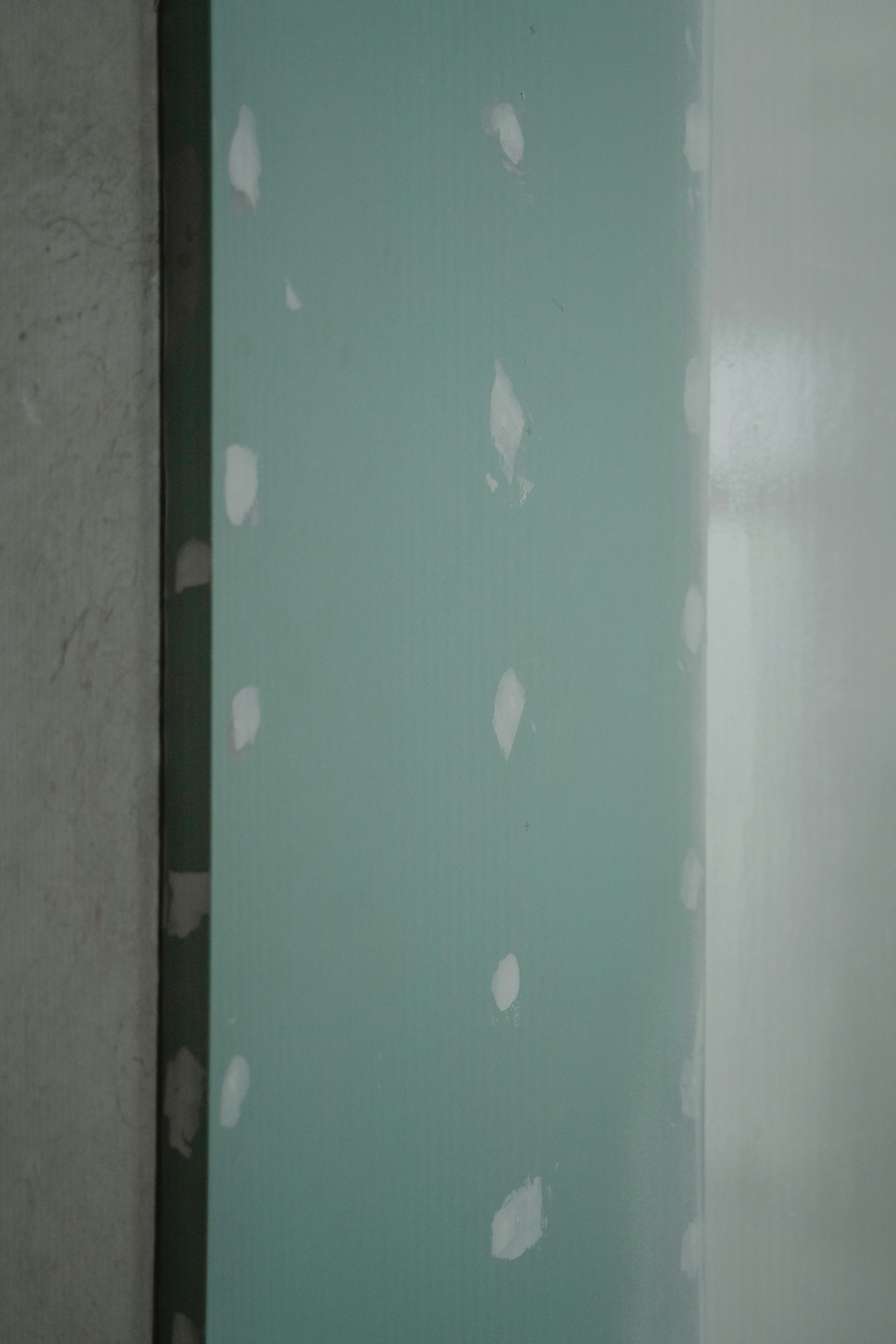
Most drywall repairs are DIY-friendly. Small holes need just spackle and paint, while larger holes require a patch, joint compound, and proper finishing technique. The key to invisible repairs is patience with multiple thin coats and proper sanding.
Drywall damage is one of the most common home repairs. Whether it’s nail holes from hanging pictures, doorknob damage, or larger holes from accidents or renovations, learning to repair drywall is a valuable skill that saves money and keeps your walls looking great.
Essential Drywall Repair Tools
Before starting any repair, gather these supplies:
For Small Repairs
- Lightweight spackle
- Putty knife (1.5” or 3”)
- Fine-grit sandpaper (120-150 grit)
- Damp sponge or cloth
- Primer and paint
For Medium and Large Repairs
- Joint compound (all-purpose or lightweight)
- Drywall tape (paper or mesh)
- Drywall patch kit or drywall scraps
- Utility knife
- Taping knives (6”, 10”, and 12”)
- Drywall saw or oscillating tool
- Sanding sponge or pole sander
- Mud pan
- Primer-sealer
Optional but Helpful
- Drywall screws
- Furring strips or backer boards
- Quick-setting compound (for time-sensitive repairs)
- Corner bead (for corner repairs)
- Dust mask
- Drop cloths
Small Hole Repairs (Under 1/2 Inch)
Nail holes, small dents, and minor dings are the easiest repairs.
Filling Nail Holes
- Remove any debris - Lightly sand around the hole to remove loose material
- Apply spackle - Use your finger or putty knife to press spackle into the hole
- Scrape excess - Pull the knife across the surface to remove excess
- Let dry - Usually 1-2 hours for lightweight spackle
- Sand smooth - Light sanding with fine-grit paper
- Apply second coat if needed (deep holes may shrink)
- Prime and paint
For small nail holes in good condition, you can skip the spackle entirely. Simply paint over them with primer-sealer, let dry, then paint. The thick primer fills tiny holes.
Fixing Small Dents
Dents without broken paper are easy:
- Don’t press down - Avoid pushing the dent deeper
- Apply spackle - Fill the depression level with the wall
- Feather the edges - Blend spackle outward from the dent
- Dry, sand, repeat if needed
- Prime and paint
Repairing Popped Nail or Screw Heads
Common in newer homes as lumber dries:
- Drive a drywall screw 1-2 inches above and below the pop
- Set the screw heads just below the surface (dimpled, not torn)
- Remove or reset the popped fastener
- Apply spackle over all fastener heads
- Sand when dry
- Apply second coat, sand
- Prime and paint
Medium Hole Repairs (1/2 Inch to 6 Inches)
These holes require more technique but are still very manageable.
Doorknob Holes and Similar Damage
Doorknob holes are extremely common. Here’s the self-adhesive patch method:
- Clean the area - Remove loose drywall and debris
- Apply mesh patch - Center a self-adhesive mesh patch over the hole
- Apply joint compound - Spread a thin coat over the entire patch
- Feather edges - Extend compound 2-3 inches beyond the patch
- Let dry completely (24 hours for standard compound)
- Sand lightly - Don’t sand through to the mesh
- Apply second coat - Extend slightly beyond first coat
- Dry and sand
- Apply third coat if needed
- Final sand with fine grit
- Prime and paint
The California Patch Method
For holes up to 6 inches, this technique provides a solid repair:
- Cut a drywall piece 2 inches larger than the hole in each direction
- Score and snap the backing paper and gypsum, leaving the face paper intact
- Peel the gypsum from the back, leaving a 1-2 inch paper border
- Apply joint compound to the wall around the hole
- Press the patch into place, paper border into the compound
- Apply compound over the patch, covering edges
- Let dry, sand, and apply additional coats
The California patch creates its own backing from the face paper border. It’s faster than cutting out to studs and works great for holes where no stud is conveniently located.
Repairing Holes Near Corners
Corner repairs need special attention:
- Cut away damaged material to solid drywall
- Use a California patch or mesh patch method
- Apply corner bead if the corner itself is damaged
- Compound and feather away from the corner
- Multiple coats are usually needed on corners
Large Hole Repairs (Over 6 Inches)
Large holes require a proper patch with backing support.
Standard Patch Method
- Square up the hole - Draw a rectangle around the damage
- Check for wiring/pipes before cutting
- Cut along your lines with a drywall saw or utility knife
- Install backing boards:
- Cut 1x3 or 1x4 lumber longer than the opening
- Insert through the hole horizontally
- Screw through the existing drywall into the board
- Install boards at top and bottom of opening
- Cut patch piece - Measure and cut drywall to fit snugly
- Install patch - Screw to backing boards
- Apply mesh tape over all seams
- First coat - Spread joint compound over tape
- Let dry 24 hours
- Second coat - Wider and smoother
- Dry and sand
- Third coat - Feather out 8-12 inches from repair
- Final sand
- Prime and paint
Cutting In to Studs (Large Repairs)
For very large holes or areas with repeated damage:
- Locate studs on either side of the damage
- Mark vertical lines at the center of each stud
- Cut along stud lines (you’ll screw into these studs)
- Cut horizontal lines to create rectangle
- Remove damaged section
- Add horizontal blocking if hole spans more than 16 inches vertically
- Cut new drywall to fit
- Install with screws every 12 inches along studs
- Tape and finish as described above
Drywall Finishing Techniques
Professional-looking results come from proper finishing technique.
Applying Joint Compound
First coat (tape coat):
- Bed the tape in a thin layer of compound
- Press tape firmly to remove air bubbles
- Cover tape with thin coat (you should see tape texture)
- Don’t worry about perfection—this coat is about adhesion
Second coat (fill coat):
- Use a wider knife (8-10 inch)
- Apply compound over the tape, filling any voids
- Extend 2-3 inches beyond first coat
- Feather edges thin
Third coat (finish coat):
- Use widest knife (10-12 inch)
- Apply thin, smooth coat
- Extend 2-3 inches beyond second coat
- Focus on blending with surrounding wall
Sanding Technique
Tools:
- Sanding sponge (medium then fine grit)
- Pole sander for large areas
- Bright work light to reveal imperfections
Process:
- Let compound dry completely - It should be uniformly white, not dark patches
- Use light pressure - You’re smoothing, not removing
- Sand in circular motions on flat areas
- Use sanding sponge edges for corners
- Wipe with damp cloth to check for scratches
- Feel with your hand - Your hand will detect what your eyes miss
Drywall dust is everywhere. Close off the work area with plastic sheeting, wear a dust mask, and consider a sanding sponge (which creates less dust than sandpaper). Vacuum frequently.
Common Finishing Mistakes
Too thick: Apply multiple thin coats instead. Thick compound shrinks, cracks, and is hard to sand.
Not feathering: Edges should blend gradually into the wall. Abrupt edges always show through paint.
Sanding too soon: Wet compound clogs sandpaper and tears. Wait for complete drying.
Over-sanding: Sanding through to tape or paper requires starting over. Use light pressure.
Skipping coats: Two coats minimum, three is standard for invisible repairs.
Texture Matching
Most walls have some texture. Matching it is the hardest part of drywall repair.
Identifying Common Textures
Smooth: No texture—actually the hardest to patch invisibly
Orange peel: Small, bumpy texture resembling orange skin
Knockdown: Texture that’s been flattened for a mottled look
Popcorn/acoustic: Heavy, bumpy ceiling texture (often contains asbestos in older homes)
Skip trowel/Santa Fe: Random swooping patterns
Sand texture: Fine grit added to paint or compound
Matching Orange Peel
- Practice first on cardboard or scrap drywall
- Thin the joint compound slightly with water
- Load a spray texture gun or use aerosol texture spray
- Apply in light passes - Start light, add more
- Let dry before evaluating—texture changes as it dries
- Prime and paint to see true match
Matching Knockdown
- Apply orange peel texture as described above
- Wait 10-15 minutes until texture begins to set
- Lightly drag a wide knife across the surface
- Clean knife frequently
- Don’t press hard - Just flatten the peaks
- Let dry and evaluate
Sand Texture
- Mix fine sand into primer or paint
- Or buy sand-textured paint
- Apply with roller
- Stipple with brush if needed for more texture
When Texture Matching Fails
If you can’t match the texture:
- Retexture the entire wall - Provides uniform appearance
- Skim coat the room - Apply thin layer over all walls for smooth finish
- Accept slight variation - Often visible only to you
Corner and Edge Repairs
Corners require special attention and materials.
Outside Corner Repair
Outside corners use corner bead (metal or paper-faced):
- Remove damaged bead if present
- Cut new corner bead to length
- Attach with screws or crimping tool (metal bead)
- Apply compound to both sides of corner
- Let dry and apply additional coats
- Sand carefully - Don’t expose metal
Inside Corner Repair
- Apply tape - Pre-creased paper tape works best
- Bed tape in joint compound
- Apply compound to one side at a time
- Let first side dry before doing second side
- Use corner tool for smooth finish (optional)
Repairing Damaged Corner Bead
Common from bumps and impacts:
- Cut away damaged section with metal snips
- Remove old compound to expose drywall
- Cut new piece of corner bead slightly shorter
- Install and compound as for new corners
Ceiling Repairs
Ceiling work is similar to walls but with additional challenges.
Working Overhead
- Use a sturdy ladder or scaffolding
- Work in short sessions - Arm fatigue leads to poor work
- Use lightweight compound - Easier to apply overhead
- Protect eyes - Compound falls down
- Cover floor - Drips are inevitable
Ceiling Textures
Popcorn ceiling repairs:
- Test for asbestos before disturbing (pre-1980 homes)
- Use spray texture to patch
- Full removal is a major project (consider professional)
Smooth ceiling repairs:
- Most difficult to hide
- Consider adding light texture to disguise repairs
Drywall Water Damage
Water damage requires assessing the extent of damage before repair.
Assessing Water Damage
Minor water staining:
- Drywall still solid
- Just needs primer-sealer and paint
Damaged but intact:
- Soft, but not crumbling
- May be repaired by drying and priming
Severely damaged:
- Crumbling, sagging, or moldy
- Must be cut out and replaced
Water Damage Repair Process
- Fix the water source first - Don’t repair until leak is stopped
- Let area dry completely - Fans and dehumidifiers help
- Check for mold - Gray, black, or fuzzy growth requires remediation
- Cut out damaged material - Remove soft or moldy sections
- Treat surrounding area with mold-resistant primer
- Repair as for standard holes
- Use mold-resistant compound and primer
- Prime with stain-blocking primer - Kilz or similar
If you see mold larger than a few square feet, or if it’s behind walls, consider professional mold remediation. Black mold (Stachybotrys) and extensive mold growth are health hazards.
Priming and Painting Repairs
The final step is critical—poor priming or painting reveals your repair.
Why Primer Matters
Repaired areas have different absorption than surrounding wall:
- Bare compound absorbs paint differently
- Creates visible “flashing” (shiny or dull spots)
- Primer-sealer creates uniform base
Priming Repaired Areas
- Choose appropriate primer:
- PVA primer for new drywall/patches
- Stain-blocking primer for water damage
- Shellac-based primer for severe stains
- Apply to all repaired areas - Extend slightly beyond repair
- Let dry completely (usually 1-2 hours)
- Check for missed spots - Compound shows through thin primer
Painting for Invisible Repairs
Spot painting (small repairs):
- Prime the repair
- Apply paint only to the repair area
- Feather edges into existing paint
- Results vary—may still be visible
Full wall painting (best results):
- Prime all repairs
- Paint the entire wall corner to corner
- Provides uniform appearance
- Always recommended for larger repairs
Paint Application Tips
- Use same sheen as existing paint
- Apply paint in same direction as original
- Use same application method (roller, brush, spray)
- Multiple thin coats beat one thick coat
When to Call a Professional
Some situations warrant professional help:
- Extensive damage - Large areas or multiple rooms
- Structural concerns - Damage exposing framing issues
- Water damage source unknown - Need leak detection
- Mold issues - Especially for large areas or HVAC contamination
- Asbestos concerns - Popcorn ceilings, older tape/compound
- Perfect finish required - Living areas with demanding aesthetics
- Time constraints - Professionals work faster with experience
Drywall Repair Costs
DIY vs. professional comparison:
DIY small repairs: $10-30 in materials DIY medium repairs: $20-50 in materials DIY large repairs: $30-75 in materials
Professional small repairs: $75-150 Professional medium repairs: $150-300 Professional large repairs: $250-500+
The DIY savings are significant, and the skills transfer to future repairs. With practice, your results will rival professional work on most repairs.
Final Tips for Success
- Patience is key - Rushing creates visible repairs
- Multiple thin coats - Better than thick coats
- Good lighting - Essential for seeing imperfections
- Practice on scrap - Test texture matching before doing the wall
- Prime everything - Never skip this step
- Accept learning curve - Your second repair will be better than your first
With these techniques, you can handle most drywall damage yourself. The skills you develop will serve you well—drywall repair is a never-ending need in any home.