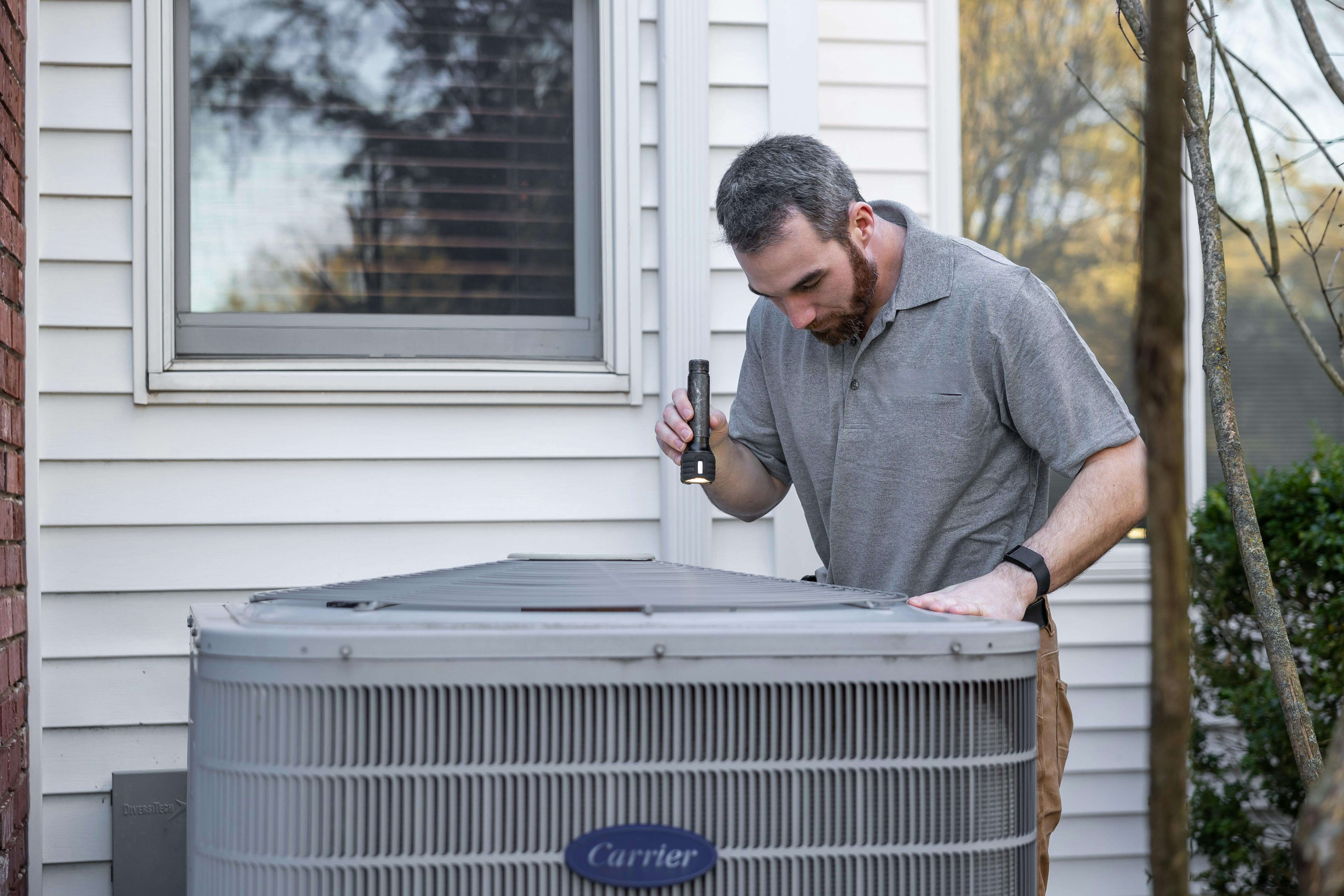

Clean your AC condenser coils annually in spring before cooling season. Turn off power, remove debris, spray coils gently with a garden hose, and allow to dry. Never use a pressure washer.
Your outdoor AC unit (condenser) releases heat from your home into the outside air. When the coils are covered in dirt, grass, and debris, heat transfer is reduced, forcing your system to work harder and use more energy. Regular cleaning improves efficiency and extends system life.
What You’ll Need
- Garden hose with spray nozzle
- Soft brush or coil brush (optional)
- Coil cleaner (optional, for heavy buildup)
- Screwdriver or nut driver
- Work gloves
- Safety glasses
Safety First
Before starting:
- Turn off the AC at your thermostat
- Turn off power at the outdoor disconnect switch (near the unit)
- Turn off the circuit breaker for the AC as an extra precaution
- Wait 5 minutes for any capacitors to discharge
Never work on or near the condenser while it’s powered. The fan can cause serious injury, and electrical components carry high voltage.
Step-by-Step Cleaning Guide
Step 1: Clear the Area
Remove debris from around the unit:
- Pull away leaves, grass clippings, and vegetation
- Clear a 2-foot perimeter on all sides
- Trim back any plants that have grown too close
Step 2: Remove Larger Debris
Clear debris from the unit itself:
- Remove visible leaves, twigs, and debris from the top and sides
- If your unit has a removable top grille, carefully lift it off to access fallen debris inside
- Remove any debris that has collected on the fan or around the motor
Step 3: Straighten Bent Fins
The aluminum fins on the coils can bend easily:
- Inspect the fins for bent or crushed areas
- Use a fin comb (available at hardware stores) to straighten bent fins
- Work carefully—the fins are delicate
Straight fins ensure proper airflow through the coils.
Step 4: Rinse the Coils
Using a garden hose:
- Set your nozzle to a gentle spray pattern
- Start at the top and work down
- Spray from the inside out if possible (pushes debris out the way it came in)
- If spraying from outside, use a gentle angle
- Continue until water runs clean
Important: Never use a pressure washer. The high pressure will bend fins and can damage the coils.
Step 5: Apply Coil Cleaner (If Needed)
For heavily soiled coils:
- Apply a foaming no-rinse coil cleaner following product directions
- Allow it to sit for the recommended time
- Rinse thoroughly with the garden hose
- Repeat if necessary
Most hardware stores carry AC coil cleaner designed for this purpose.
Step 6: Let It Dry
Before restoring power:
- Allow the unit to dry completely (at least 30 minutes)
- Replace any covers or grilles you removed
- Ensure the unit is level (check with a level, adjust if necessary)
Step 7: Restore Power
In reverse order:
- Turn on the circuit breaker
- Turn on the outdoor disconnect
- Set your thermostat to cooling mode
- Verify the unit starts and runs normally
After cleaning, your AC should run more quietly and efficiently. If you notice ice forming on the refrigerant lines or continued problems, call a professional.
Cleaning Frequency
Minimum: Once per year in spring before cooling season
More frequently if:
- You have cottonwood or other trees that shed
- The unit is near dusty areas or dirt
- You notice reduced cooling performance
- Visible buildup on the coils
What Not to Do
- Don’t use a pressure washer: Damages fins and coils
- Don’t spray electrical components: Avoid the electrical box
- Don’t bend the fins: Work carefully around the delicate aluminum
- Don’t skip the power shutoff: Safety first
- Don’t use harsh chemicals: Stick to coil cleaner or plain water
Signs Your Coils Need Cleaning
- AC runs longer than usual to cool your home
- Higher than normal energy bills
- Visible dirt, grass, or debris on the unit
- Reduced airflow from indoor vents
- Ice formation on refrigerant lines
Maintaining Your Condenser Year-Round
During Cooling Season
- Check monthly for debris buildup
- Keep vegetation trimmed back
- Don’t stack items against or on top of the unit
Off-Season Care
- Remove debris before covering (if you choose to cover it)
- Use a breathable cover that keeps out debris but prevents moisture buildup
- Remove the cover before spring startup
Professional Cleaning
While basic cleaning is a DIY task, consider professional cleaning for:
- Heavy buildup that won’t rinse off
- Mold or mildew growth
- Evaporator coil cleaning (indoor coil—harder to access)
- Annual maintenance tune-up (includes thorough cleaning)
A professional can also check refrigerant levels, electrical connections, and overall system performance during a tune-up visit.