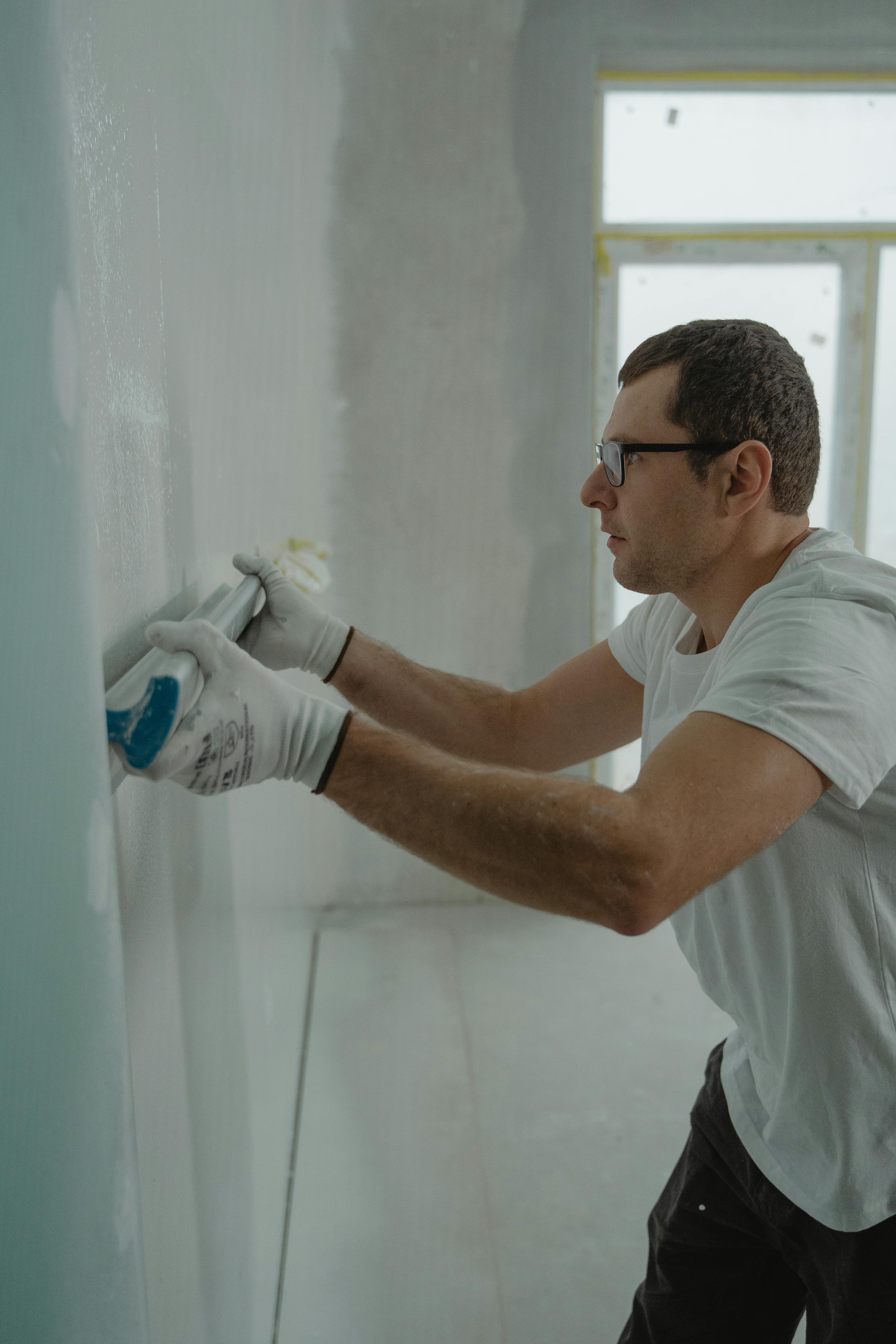
Drywall crack repair is DIY-safe for cosmetic hairline and seam cracks. Use paper tape (stronger than mesh) embedded in joint compound, apply 2-3 thin coats with 24 hours between each, then sand, prime, and paint. Cracks wider than 1/8 inch, horizontal, or diagonal at 45 degrees may indicate foundation problems—get professional assessment before repair.
Cracks in drywall are common and usually cosmetic, caused by normal settling, temperature changes, or improperly taped seams. The key is knowing which cracks are safe to repair yourself and which require professional evaluation.
What You’ll Need
Tools:
- Utility knife
- Putty knife (4-6”)
- Taping knife (6-8”)
- Sandpaper (100-150 grit)
- Sanding sponge
- Drop cloth
- Dust mask, safety glasses
Materials:
- Paper drywall tape: $3-6/roll
- Joint compound (quart): $6-12
- Primer: $10-15
- Total DIY cost: $20-50
Diagnose Your Crack First
Cosmetic Cracks (Safe to DIY)
- Hairline cracks: Under 1/16” to 1/8” wide
- Seam cracks: Follow drywall joints in straight lines
- Corner cracks: At door/window frames
- Stable: Don’t change over weeks of monitoring
Structural Warning Signs (Call a Pro)
| Warning Sign | What It May Indicate |
|---|---|
| Wider than 1/8” | Foundation movement |
| Horizontal cracks | Lateral pressure on foundation |
| Diagonal/jagged at 45° | Active structural stress |
| Stair-step pattern | Foundation settling |
| Getting wider over time | Ongoing movement |
| Doors/windows sticking | House shifting |
| Sloping floors | Foundation failure |
Before repairing any crack, monitor it for 2-3 weeks. Mark the ends with pencil and measure the width. If it’s growing, you have an active problem that repair won’t fix.
Step-by-Step: Tape and Mud Technique
Day 1: Prepare and Tape
Step 1: V-Notch the Crack
- Protect nearby woodwork with painter’s tape
- Using a utility knife, cut a V-shaped groove along the entire crack
- Make the notch 1/8” to 1/4” deep
- Remove all loose material and debris
- Sand remaining loose material with 100-grit
- Clean dust with a damp rag
Why V-notch? Joint compound won’t bond well to painted surfaces. The groove exposes raw drywall for better adhesion.
Step 2: Embed Paper Tape
- Pro tip: Moisten paper tape with water before applying to prevent bubbles
- Apply 1/8” layer of joint compound over the crack with a 6” knife
- Press paper tape into wet compound, centering the crease on the crack
- Starting at one end, drag knife firmly toward the middle to squeeze out excess
- Repeat from the other end
- Apply thin layer of compound over tape
- Feather edges 2” beyond tape on both sides
- Wait 24 hours to dry
Day 2: Second Coat
- Lightly sand any high spots with 120-grit (don’t expose tape)
- Apply thin coat using 6-8” knife
- Feather out 6-7” on both sides
- Use long, continuous strokes
- Wait 24 hours to dry
Day 3: Final Coat
- Sand lightly if needed
- Apply third coat with 10-12” taping blade
- Feather further out for invisible repair
- Use long, smooth strokes
- Wait 24 hours before sanding
Day 4: Sand and Paint
- Sand smooth with 150-grit
- Avoid exposing tape
- Remove dust with damp cloth
- Prime repaired area
- Paint to match
Drying Times
| Stage | Minimum Time |
|---|---|
| Between coats | 24 hours |
| Before sanding | 24 hours |
| Before painting | 24 hours after final coat |
Optimal conditions: 65-80°F, 20-40% humidity. Below 50°F, don’t mud—it won’t cure properly.
Preventing Cracks from Returning
Why Cracks Come Back
- Foundation still moving (repair is futile until stabilized)
- Crack wasn’t V-notched before taping
- Used mesh tape with pre-mixed compound
- Used compound alone without tape
- Temperature/humidity extremes
For Stubborn Recurring Cracks
Use flexible spackling products designed to move with the wall:
- DAP Alex Flex Flexible Spackling — Sandable, eliminates recurring cracks
- DAP Elastopatch — Permanently flexible (not sandable)
- Strait-Flex Crack Tape — Specialty tape for stubborn stress cracks
When to Call a Pro
Call a professional immediately if:
- Cracks wider than 1/8” to 1/4”
- Horizontal cracks (indicates lateral foundation pressure)
- Diagonal cracks at 45-degree angles
- Stair-step cracks in brick or block walls
- Multiple cracks appearing simultaneously
- Cracks with moisture present
- Doors and windows sticking
- Visible bowing in walls
Professional costs:
- Hairline crack repair: $50-150
- Medium crack repair: $100-330
- Foundation-related repairs: $2,000-30,000+
Common Mistakes to Avoid
- Rushing drying time — Each coat must dry completely or next coat will crack
- Applying coats too thick — Thin coats (1/8” max) dry faster and crack less
- Using mesh tape with pre-mixed compound — Will crack. Mesh requires setting compound.
- Skipping the V-notch — Compound won’t bond to painted surfaces
- Not using tape — Compound alone will crack again within months
- Over-sanding — Exposing tape means starting over
- Ignoring structural signs — Cosmetic repair of structural cracks wastes time and money
Frequently Asked Questions
How do I know if a wall crack is structural or cosmetic?
Cosmetic cracks are hairline (under 1/8 inch), follow seams, and don’t change over time. Structural warning signs include: cracks wider than 1/8 inch, horizontal cracks, diagonal cracks at 45-degree angles, stair-step patterns, or cracks that are growing. If doors stick or floors slope, call a professional.
Why do my drywall cracks keep coming back?
Recurring cracks usually mean the underlying cause wasn’t addressed. Common reasons: foundation movement still occurring, crack wasn’t V-notched before taping, used mesh tape with pre-mixed compound (will crack), or no tape was used at all. For stubborn cracks, use flexible spackling like DAP Alex Flex.
Should I use mesh tape or paper tape for cracks?
Use paper tape for cracks—it’s stronger and less prone to cracking than mesh. If using mesh tape, you MUST use setting-type compound (hot mud), never pre-mixed. Paper tape works with any compound and creates more durable repairs for stress areas.
Related Guides
- Drywall Repair Guide — Complete overview of drywall repairs
- How to Patch Small Drywall Holes — Quick fixes for nail holes and dents
- How to Tape and Mud Drywall Seams — Professional finishing techniques