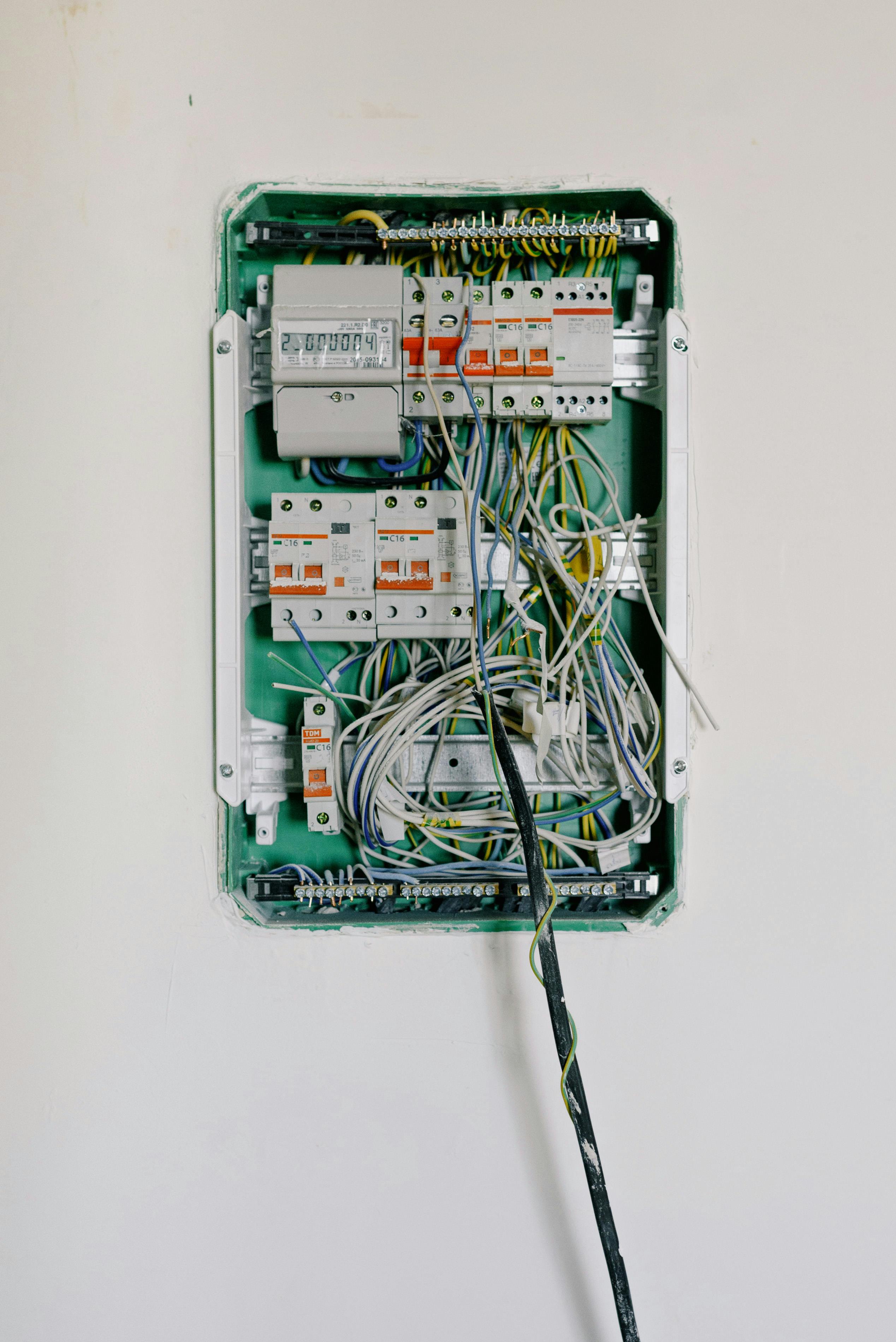
Circuit breakers trip for three reasons: overload (too many devices), short circuit (hot wire touching neutral), or ground fault (current escaping to ground). Overloads are DIY-safe to fix by redistributing loads. Short circuits and ground faults require an electrician—these indicate serious fire or shock hazards.
A tripping breaker is doing its job—protecting your home from electrical fires and shocks. The key is identifying why it’s tripping. This guide helps you diagnose the cause and know when professional help is needed.
The Three Causes of Tripped Breakers
1. Circuit Overload (Most Common — DIY-Safe)
What it is: Too many devices drawing power exceed the circuit’s capacity.
Example: Running a space heater (1,500W) + hair dryer (1,500W) on a 15-amp circuit (1,800W max).
Symptoms:
- Breaker trips when specific appliances run together
- Stays reset when load is reduced
- No burning smell or scorch marks
DIY Solution: Redistribute high-draw appliances across different circuits. Unplug devices not in use.
2. Short Circuit (Dangerous — Call Electrician)
What it is: Hot wire contacts neutral wire, another hot wire, or a conductive surface, creating massive current surge.
Symptoms:
- Breaker trips immediately upon reset, even with nothing plugged in
- Burning smell
- Possible scorch marks
Causes: Damaged insulation, loose connections, faulty appliances, wires damaged during construction.
Action: Do not attempt DIY repair—call a licensed electrician immediately.
3. Ground Fault (Dangerous — Call Electrician)
What it is: Current escaping its intended path, flowing to ground through an unintended conductor.
Why dangerous: Primary shock hazard—if you become the path to ground, electricity flows through you.
Symptoms:
- Trips intermittently
- Often moisture-related
- Common in bathrooms, kitchens, outdoors
Action: Call a licensed electrician—do not attempt DIY repair.
Circuit Capacity Quick Reference
| Circuit | Max Wattage | Safe Continuous Load (80% Rule) |
|---|---|---|
| 15-amp | 1,800W | 1,440W |
| 20-amp | 2,400W | 1,920W |
Common high-draw appliances:
- Space heaters: 1,000-1,500W
- Hair dryers: 1,200-1,875W
- Microwaves: 600-1,200W
- Vacuum cleaners: 1,000-1,200W
How to Safely Reset a Breaker
Arc flash warning: Resetting a breaker with a downstream fault can trigger an arc flash with temperatures reaching 35,000°F. Always stand to the side of the panel and face away while operating the breaker.
Safety precautions:
- Stand to the SIDE of the panel—never directly in front
- Turn your face AWAY while operating the breaker
- Use ONE HAND only—keep other hand at your side
- Wear safety glasses (recommended)
Reset process:
- Determine cause first—only reset if certain it was an overload
- Turn off/unplug all devices on the circuit
- Locate tripped breaker (handle in middle “tripped” position)
- Standing to the side, face away from panel
- Push breaker firmly to full OFF position first
- Wait a few seconds
- Push firmly to ON position
- If it holds, gradually reconnect devices one at a time
STOP and call an electrician if:
- Breaker trips immediately again
- Panel is wet
- You see scorch marks or smell burning
- Multiple breakers are tripped
- Breaker won’t stay reset
Signs of a Bad Breaker
Call an electrician immediately if you notice:
- Hot to the touch — Should never feel warm
- Won’t stay in reset position
- Scorch marks or discoloration on breaker or panel
- Burning smell from panel
- Buzzing or crackling sounds
- Physical damage — Cracking, melting, corrosion
- Trips frequently without obvious cause
Dangerous Panel Brands — Replace Immediately
These panel brands have documented safety issues and should be replaced:
- Federal Pacific Electric (FPE) / Stab-Lok — Breakers fail to trip; estimated 2,800 fires annually; failure rates up to 60%
- Zinsco (also Sylvania, GTE-Sylvania) — Breakers can melt to bus bar; power may flow even when “off”
- Challenger — Recalled in 1988 for fire hazards
Insurance note: Many insurers deny coverage for homes with FPE or Zinsco panels.
AFCI vs GFCI Breakers
| Feature | AFCI | GFCI |
|---|---|---|
| Purpose | Protects property from fires | Protects people from shock |
| Detects | Dangerous arcing | Current imbalance (4-6mA) |
| Required locations | Bedrooms, living areas, kitchens | Bathrooms, kitchens, outdoors, basements |
When to Call an Electrician
Call a licensed electrician if:
- Breaker trips immediately upon reset (even with nothing plugged in)
- Any burning smell from panel or outlets
- Visible scorch marks, melting, or discoloration
- Suspected short circuit or ground fault
- Breaker won’t reset at all
- Multiple breakers tripping simultaneously
- Same breaker trips more than once per month
- Breaker feels hot
- You have an FPE, Zinsco, or Challenger panel
Common Mistakes to Avoid
- Repeatedly resetting without identifying cause — Creates fire hazard
- Standing directly in front of panel — Arc flash risk
- Ignoring monthly trips — “Nuisance tripping” may indicate real problem
- Attempting to repair/replace breakers yourself — Requires licensed electrician
- Using tape to hold breaker ON — Extremely dangerous fire hazard
Frequently Asked Questions
Why does my circuit breaker keep tripping?
Circuit breakers trip for three main reasons: overload (too many devices drawing power), short circuit (hot wire touching neutral or another conductor), or ground fault (current escaping to ground). Only overloads are DIY-safe to resolve by redistributing loads across circuits.
Is it safe to keep resetting a tripped breaker?
Never reset a breaker more than once without identifying the cause. If it trips immediately after reset, even with nothing plugged in, you likely have a short circuit or ground fault—stop and call an electrician. Repeated resetting creates fire and shock hazards.
How do I know if my circuit breaker is bad?
Signs of a bad breaker include: feeling hot to touch, won’t stay reset, visible scorch marks or discoloration, burning smell, buzzing sounds, or trips frequently without obvious cause. Call an electrician immediately if you notice any of these signs.
Related Guides
- Electrical Basics Guide — Complete overview of home electrical safety
- GFCI Outlet Won’t Reset — Troubleshoot GFCI problems
- Flickering Lights Causes — Diagnose electrical issues