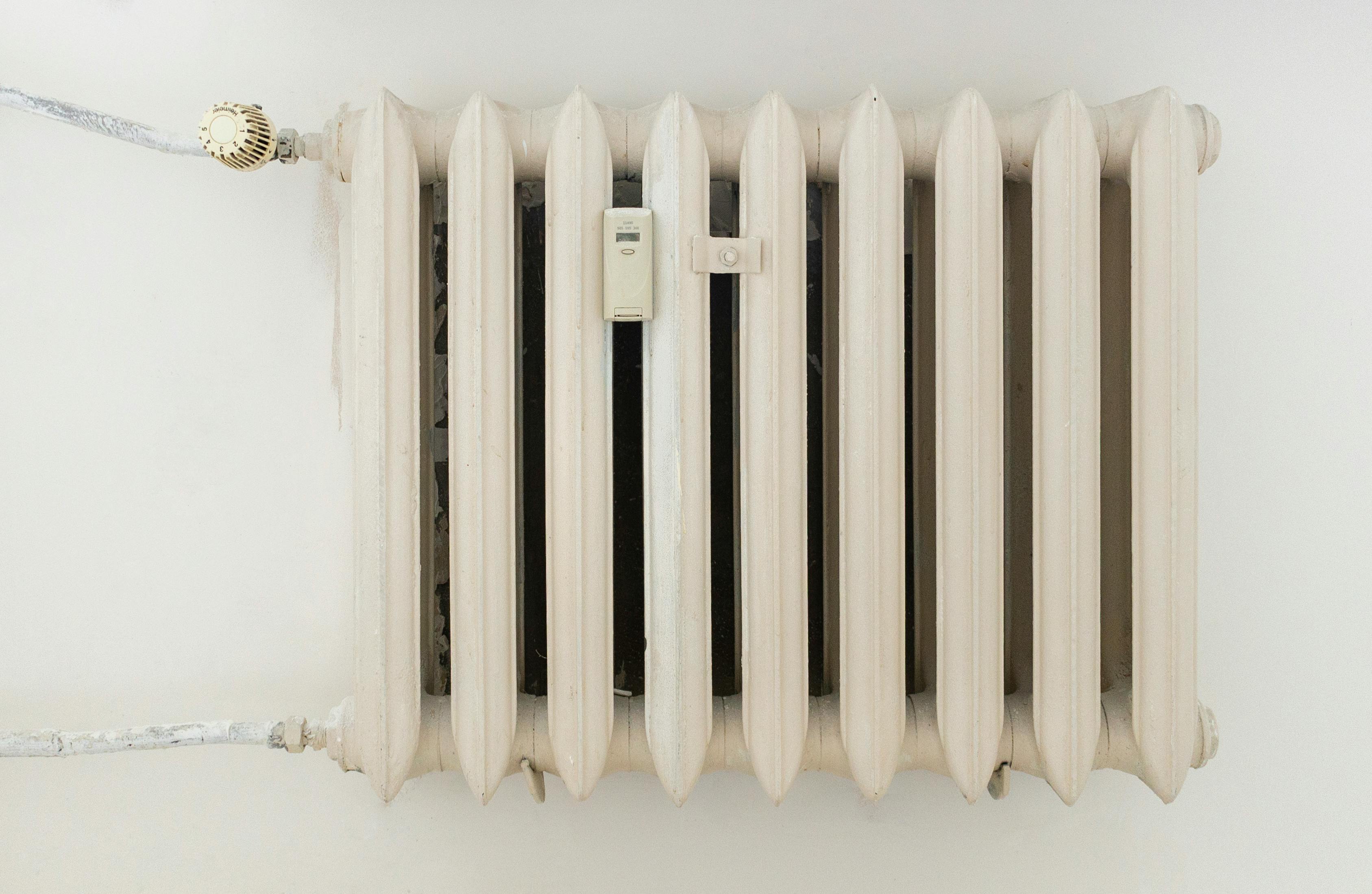
Use a radiator key to open the bleed valve until water flows steadily, then close it. Bleed radiators at the start of heating season and whenever they’re warm at the bottom but cool at the top.
If your radiators are warm at the bottom but cold at the top, air is trapped inside. Bleeding radiators releases this air, allowing hot water to fully circulate. It’s a simple task that significantly improves heating performance.
Signs Your Radiators Need Bleeding
- Radiator is cold at the top but warm at the bottom
- Takes longer than usual to heat up
- Gurgling or bubbling sounds from the radiator
- Some radiators much colder than others
- Heating system struggles to warm your home
What You’ll Need
- Radiator key (available at hardware stores for a few dollars)
- Cloth or small towel
- Small container (to catch drips)
- Gloves (optional, water may be dirty)
If you don’t have a radiator key, some radiators can be bled with a flat-head screwdriver. Check your valve type before purchasing a key.
Before You Start
- Turn on your heating: Run the system for 10-15 minutes so radiators warm up
- Turn off the heating: Once warm, turn off the system and wait 5 minutes
- Identify which radiators need bleeding: Feel for cold spots at the top
Bleeding works best when the system is warm but not actively circulating.
Step-by-Step Bleeding Process
Step 1: Locate the Bleed Valve
The bleed valve is usually:
- At the top corner of the radiator
- Opposite end from the main inlet valve
- A small square fitting (or slot for screwdriver)
Step 2: Prepare for Drips
- Place a cloth or towel under the valve
- Hold your container ready to catch water
- Have extra cloths nearby
Step 3: Open the Valve
- Insert the radiator key into the valve
- Turn counter-clockwise (about 1/4 to 1/2 turn)
- You’ll hear a hissing sound—that’s air escaping
- Hold the key in position
Step 4: Wait for Water
- Keep the valve open until the hissing stops
- Water will start to drip or trickle out
- Once you see a steady stream of water (no sputtering), air is released
Step 5: Close the Valve
- Turn the key clockwise to close the valve
- Don’t overtighten—just snug
- Wipe up any drips
Step 6: Repeat for Other Radiators
Work through your home, bleeding each radiator that has cold spots:
- Start with ground floor radiators
- Work your way up (if multi-story)
- Radiators farthest from the boiler often have the most air
Hot water radiators typically use much hotter water than you might expect. Use caution and don’t touch the radiator body when it’s been running.
After Bleeding: Check Your Boiler Pressure
Bleeding releases water along with air, which can lower system pressure:
- Locate the pressure gauge on your boiler
- Normal pressure is typically 1-1.5 bar (check your manual)
- If pressure is low, you may need to repressurize
How to Repressurize (Combi Boilers)
- Locate the filling loop (usually a braided hose with valves)
- Open both valves slowly
- Watch the pressure gauge
- When it reaches 1-1.5 bar, close both valves
- Check your boiler manual for specific instructions
If you’re unsure about repressurizing, call a heating professional.
Bleeding Frequency
Bleed your radiators:
- At the start of each heating season
- When you notice cold spots
- After any plumbing work that may have introduced air
- If your system has been drained and refilled
Troubleshooting
No Air Comes Out
- The radiator may not need bleeding
- The valve might be blocked—try gently loosening a bit more
- Check if the radiator’s main valve is open
Water Won’t Stop
- You may have turned the valve too far—close it
- If the valve won’t close, you may need a new bleed valve (call a professional)
Still Cold After Bleeding
- Check that the radiator valve is fully open
- The thermostatic radiator valve (TRV) might be stuck
- There could be sludge buildup—may need a powerflush
Radiator Still Has Cold Spots in the Middle
This indicates sludge buildup rather than air. A professional powerflush can clean the system.
When to Call a Professional
Contact a heating engineer if:
- You can’t get the valve to open or close
- The system won’t hold pressure after repressurizing
- Multiple radiators won’t heat despite bleeding
- You hear constant gurgling throughout the system
- Water appears brown or full of debris
- You’re uncomfortable working with the boiler
Tips for Better Heating Performance
- Bleed radiators annually before heating season
- Keep radiators clear of furniture and curtains
- Use thermostatic radiator valves to balance heat
- Consider adding a magnetic filter to catch debris
- Have your boiler serviced annually