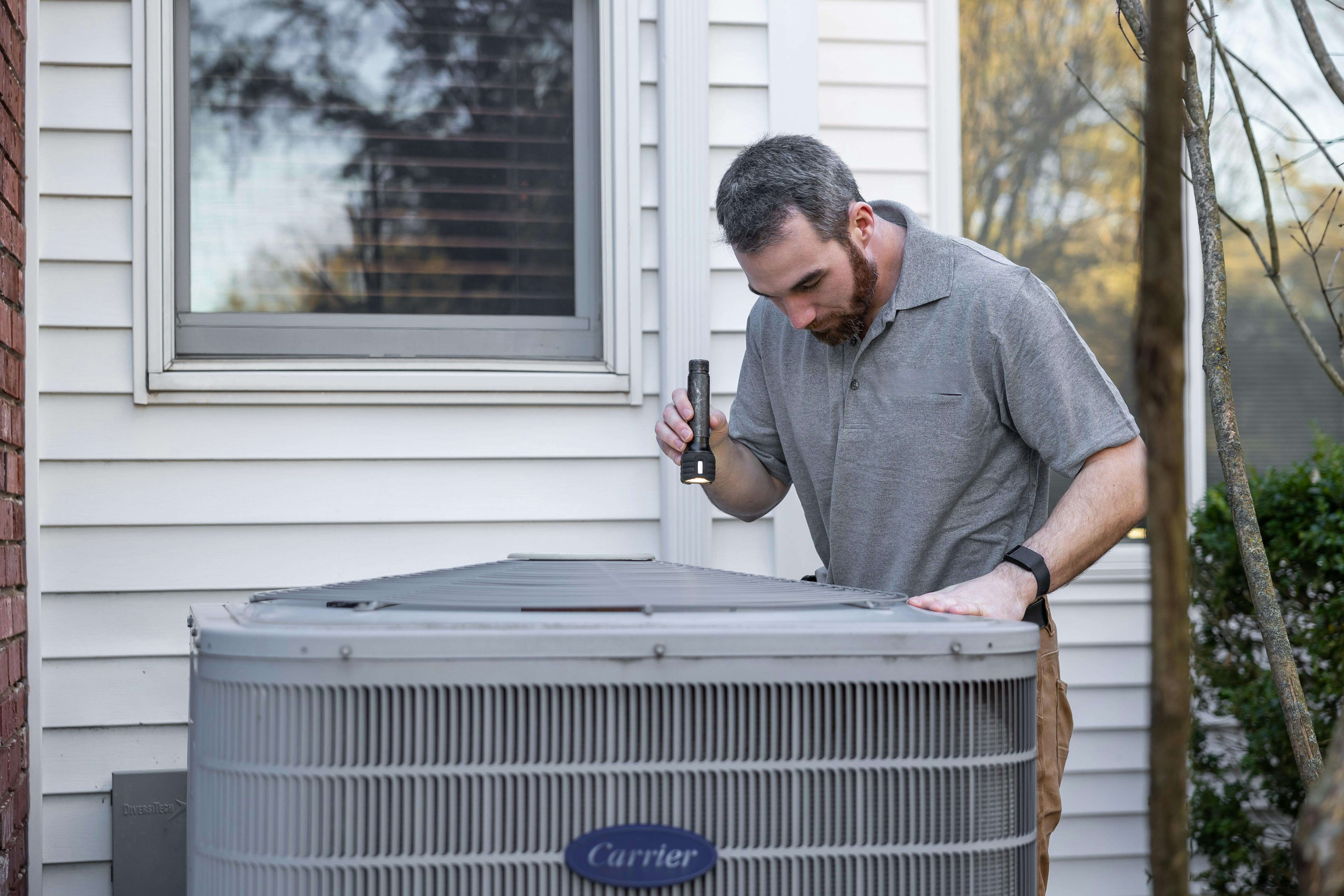
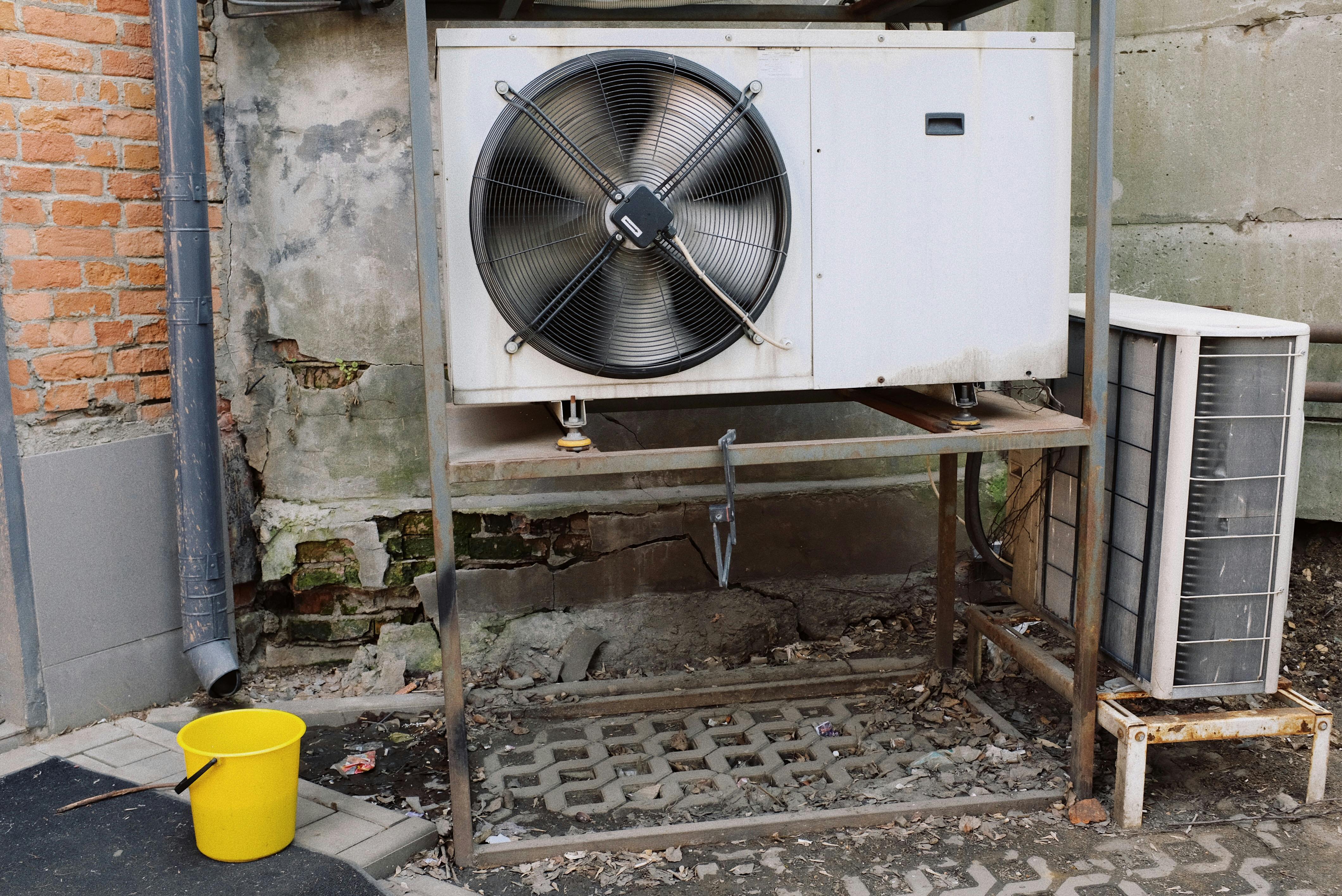
Sudden new noises usually indicate a problem. Banging, screeching, and grinding require immediate attention. Clicking at startup/shutdown and a gentle hum are typically normal.
Your HVAC system shouldn’t sound like a haunted house. While some operational sounds are normal, new or unusual noises often signal developing problems. Catching these early can prevent expensive repairs and breakdowns.
Normal HVAC Sounds
First, let’s establish what’s normal:
- Gentle humming: Compressor and motors running
- Soft whooshing: Air moving through ducts
- Click at startup/shutdown: Relay switches activating
- Slight expansion sounds: Ducts expanding with temperature changes
- Occasional dripping: Condensation draining (AC)
If these sounds have always been there and haven’t changed, they’re part of normal operation.
Warning Sounds and What They Mean
Banging or Booming
Location: Furnace, ductwork, or outdoor unit
Possible causes:
- Furnace: Delayed ignition (gas buildup igniting)—call for service
- Ductwork: Metal expanding/contracting—usually not urgent
- Outdoor unit: Loose component or debris—turn off and inspect
A loud bang from your furnace at startup could indicate delayed ignition, which can crack the heat exchanger. Have this checked promptly—it’s both a safety and efficiency concern.
Screeching or Squealing
Location: Indoor unit/air handler or outdoor unit
Possible causes:
- Belt-driven system: Worn or slipping belt
- Direct-drive system: Motor bearing failure
- Compressor: Internal component issue
Action: Turn off the system and call for service. Running with bad bearings can cause motor failure.
Grinding or Metal-on-Metal
Location: Any component with moving parts
Possible causes:
- Motor bearings failing
- Broken blower wheel
- Compressor issues
Action: Turn off immediately. This sound indicates serious mechanical failure. Continued operation can cause extensive damage.
Clicking
When it’s normal: Single click at startup and shutdown
When it’s a problem: Repeated clicking without the system starting could indicate:
- Failed igniter (furnace)
- Electrical relay problems
- Thermostat issues
- Compressor contractor failing
Buzzing
Location: Outdoor unit, electrical panel, or indoor unit
Possible causes:
- Loose wiring or electrical connections
- Failing contactor
- Refrigerant leak
- Debris in outdoor unit
- Failing compressor
Action: A persistent buzz warrants inspection, especially if it’s new.
Rattling
Location: Anywhere in the system
Possible causes:
- Loose screws or panels
- Debris in outdoor unit
- Loose ductwork
- Components coming loose
Action: Often a simple fix—tighten loose parts. Check for debris in the outdoor unit.
Hissing or Whistling
Location: Ductwork, indoor unit, or outdoor unit
Possible causes:
- Ductwork: Air leak at connections
- Indoor unit: Air escaping around filter or panels
- Outdoor unit: Refrigerant leak—call for service immediately
A loud hiss from the outdoor unit could indicate a significant refrigerant leak.
Bubbling or Gurgling
Location: Refrigerant lines or drain line
Possible causes:
- Refrigerant issues
- Clogged condensate drain
- Air in refrigerant lines
Action: If coming from refrigerant lines, call for service. If from the drain area, check for clogs.
Thumping or Vibration
Location: Usually outdoor unit
Possible causes:
- Compressor mounts deteriorating
- Unit not level
- Debris hitting fan blades
Action: Turn off and inspect. Remove any debris. If mounts are worn, schedule service.
Sound Location Guide
From Your Outdoor Unit
| Sound | Likely Cause | Urgency |
|---|---|---|
| Humming without fan | Bad capacitor or motor | Call for service |
| Grinding | Fan motor bearings | Turn off, call now |
| Banging | Loose parts or debris | Inspect when off |
| Hissing | Refrigerant leak | Call for service |
| Buzzing | Electrical issue | Call for service |
From Your Indoor Unit/Furnace
| Sound | Likely Cause | Urgency |
|---|---|---|
| Screeching | Belt or bearing | Call for service |
| Loud boom at startup | Delayed ignition | Call promptly |
| Rattling | Loose component | Inspect |
| Clicking (no start) | Igniter or control issue | Call for service |
From Your Ductwork
| Sound | Likely Cause | Urgency |
|---|---|---|
| Popping | Thermal expansion | Usually normal |
| Whistling | Air leak | Not urgent but worth fixing |
| Rattling | Loose connection | Inspect and tighten |
When to Call Immediately
Contact an HVAC professional right away for:
- Grinding or metal-on-metal sounds: Indicates mechanical failure
- Loud banging from furnace: Could be dangerous delayed ignition
- Hissing from outdoor unit: Possible refrigerant leak
- Burning smell with any sound: Could indicate electrical fire risk
- Any sound accompanied by the system not working
Try to record the sound on your phone before calling. This helps the technician understand the problem and come prepared with the right parts.
Preventing Noisy Problems
Regular maintenance reduces unexpected noises:
- Annual professional tune-ups
- Monthly filter changes
- Keeping outdoor unit clear
- Addressing small issues before they grow
- Lubricating moving parts (during professional maintenance)
Most HVAC noises start small and gradually worsen. Addressing them early is almost always cheaper than waiting for complete failure.